A bathroom is the room where material matters most. Wet, warm and touched every day, it asks more of a surface than anywhere else in the home. So the stone you choose is not just an aesthetic decision — it is a practical one.
Start with how the room is used
Before falling for a sample, think about the room. A family bathroom wants a stone that forgives — something with texture and warmth. A guest powder room can lean into drama: a veined marble, a bookmatched feature wall. The use should lead the look.
Limestone: calm and consistent
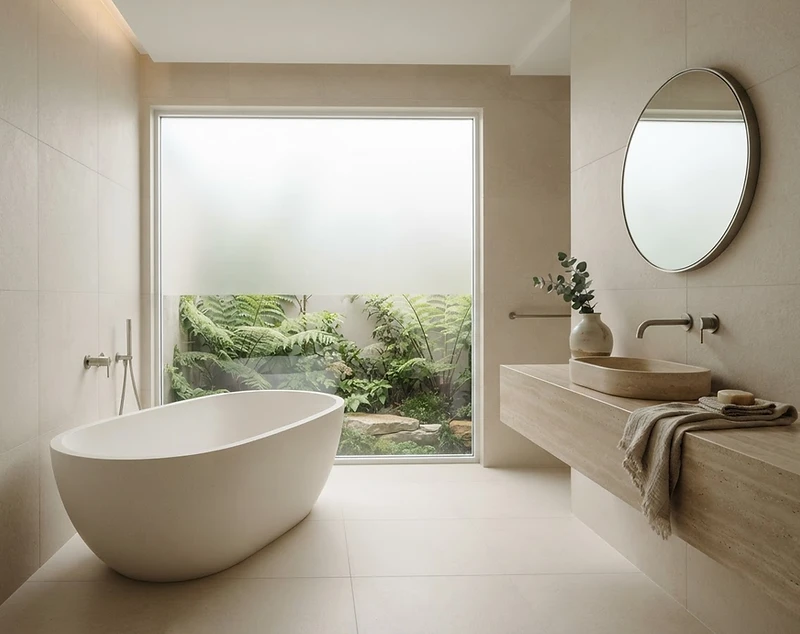
Limestone remains our most-requested stone for bathrooms. Pale, consistent and quietly textured, it reads as architecture rather than decoration. It suits full-height runs and continuous floor-to-wall installations where the aim is calm.
Marble: character and movement
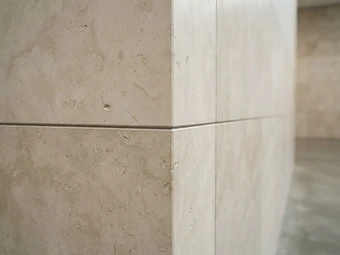
Marble brings movement. Used well, it turns a wall or floor into a feature. The discipline is in the set-out — orienting veining for continuity and mitring external returns so the stone reads as a solid block. It asks for more planning, and rewards it.
Travertine: warmth with texture
Travertine sits between limestone and marble — warm, textured and quietly characterful. It suits bathrooms that want a softer, less polished feel.
The details that matter
Whatever the stone, the details decide the result. Falls resolved before the membrane goes down. Niches set out to land on full tiles. Grout joints tight and consistent. A sealer suited to the stone and its exposure. These are the things that separate a finished bathroom from a considered one.
If you are planning a bathroom and weighing materials, we are happy to talk through the options on site.