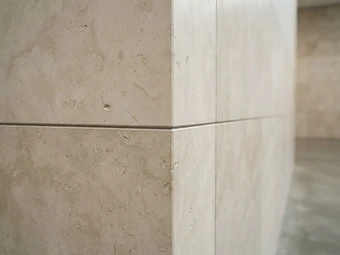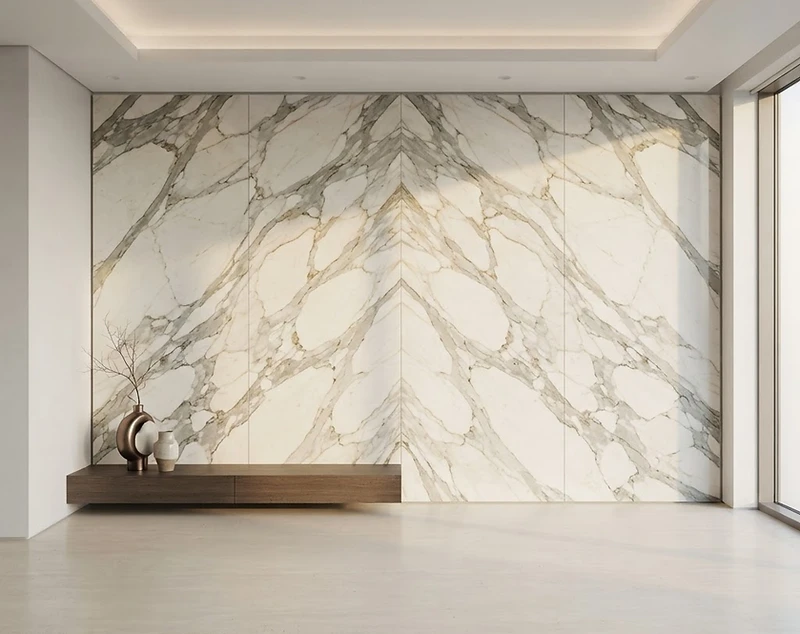

A mitre is the detail that turns a sheet of stone into a block. By cutting two pieces at 45 degrees and joining them at the external corner, the face of the stone wraps around the edge — so a splashback reads as a solid slab rather than a thin panel.
Why it matters
Standard external corners show the cut edge of the tile — the porcelain or stone body, often a different tone to the face. It is a small thing, and it is the difference between a surface that looks installed and a surface that looks carved.
Where mitred details shine
Splashbacks, shower niches, bench edges, feature walls and bath surrounds. Anywhere the eye lands on an external return. In a luxury interior, these are the details that define the standard.
The craft
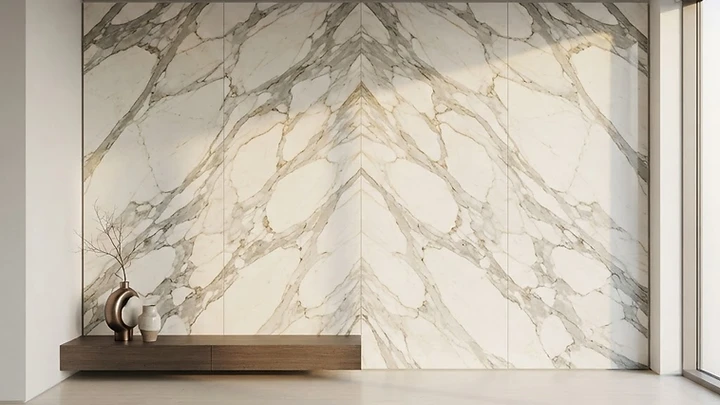
Mitring is exacting work. The cuts must meet cleanly, the adhesive must hold the angle true, and the join is fine-filled and polished so the seam all but disappears. With bookmatched stone, the veining is oriented to continue around the corner.
When to plan for it
Mitred returns are decided at set-out, not on site. If you want a stone surface to read as monolithic, tell your tiler early — the material, the layout and the budget all follow from that decision.
It is a quiet piece of craft, and often the detail clients remember longest.