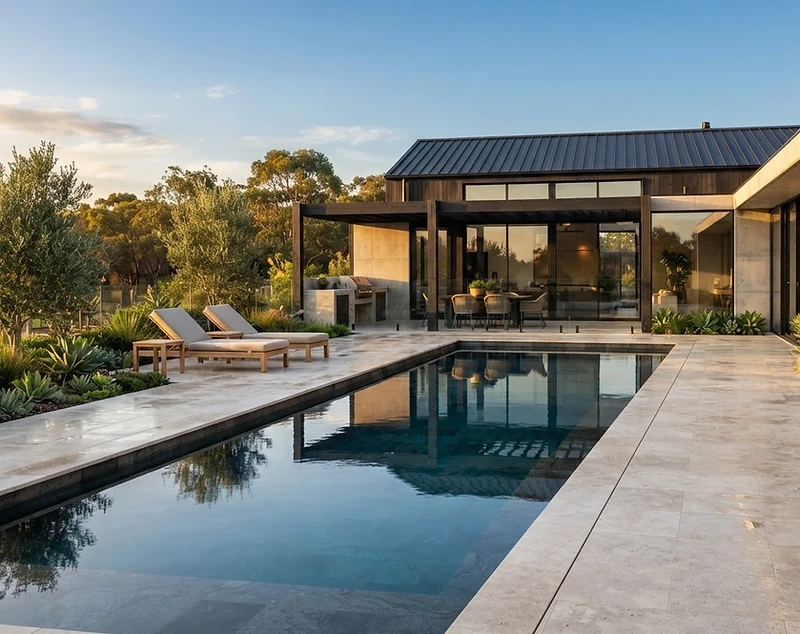
An outdoor surface has two jobs: it must look like a natural extension of the architecture, and it must survive everything the weather throws at it. The first is a design problem. The second is a building problem. Both need to be solved before the first tile is laid.
Choose a material rated for exposure
Not every stone belongs outside. Freeze-thaw cycles, salt and UV all take a toll. We work with slip-rated limestones, porcelains and granites tested for exterior use — materials that will look as considered in a decade as they do on day one.
Resolve falls and drainage early
Water on a tiled outdoor surface should never sit. We resolve falls during set-out so water moves off the surface in the direction the design intends, with drainage hidden within the layout rather than cut into it. Get this right and the surface performs invisibly.
The transition from inside to out
The most successful outdoor surfaces continue the language of the interior. A continuous paving layout that runs from the living area through to the terrace, with the threshold detailed carefully, makes architecture and landscape read as one.
Substrate and movement
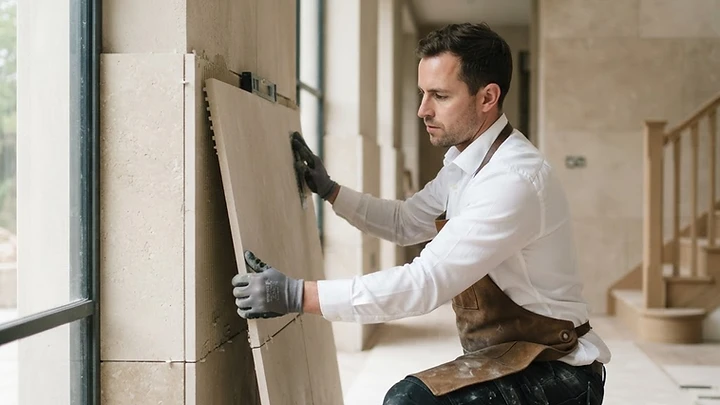
Outdoor tiling lives or dies on its substrate. We allow for movement, drainage layers and the right adhesive for the material and exposure. It is unglamorous work, and it is the reason an outdoor surface lasts.
Outdoor tiling rewards planning. If you are considering an outdoor entertaining area or pool surround, we would be glad to look at the site with you.