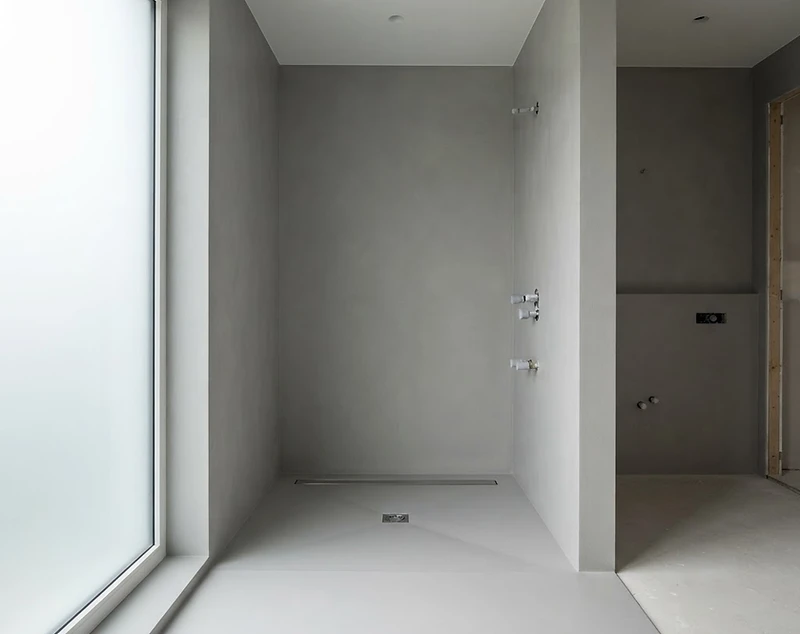
Waterproofing is the least visible and most important part of any wet area. Get it wrong and no amount of beautiful tile will save the room. Get it right and the surface beneath will perform for the life of the installation.
Where waterproofing matters
Any wet area needs it — bathrooms, wet rooms, laundries, balconies and decks. In each, the aim is the same: stop water reaching a substrate it can damage.
What a compliant system includes
A proper system is more than a coat of membrane. It includes the substrate preparation, the falls to a drainage point, the sealing of corners and junctions, the right membrane for the location, and a water-stop at doorways. Done to Australian standards, it is a sequence — not a single product.
Falls before membrane
In a shower or wet room, the floor must fall to the drain. We resolve falls in the screed before the membrane goes down, so water moves correctly and the membrane sits on a surface that already performs.
Corners and junctions
Most leaks happen at corners, niches and penetrations — not in the middle of a floor. These junctions are detailed with reinforcement and the right sealants, so the system stays continuous where movement is most likely.
Do not skip to save
Waterproofing is not the place to economise. The cost of doing it properly is modest. The cost of a failure — to the room below, the substrate, and the finished tile — is not.
If you are renovating a wet area, ask your tiler about the waterproofing system before you ask about the tile. We are always happy to talk through it.